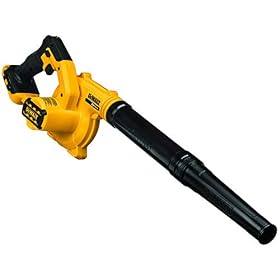
A variable-speed trigger gives finer control for everyday cleanup, while a turbo button provides a quick burst of maximum airflow. The better choice depends on your yard, debris, surfaces, and how often you need concentrated power.
A variable-speed trigger is usually the better choice for controlled, efficient yard cleanup, while a turbo button is useful when you occasionally need a short burst of maximum airflow. Some leaf blowers offer both controls, which is often the most flexible setup.
How the two controls work
Variable-speed trigger
A variable-speed trigger changes airflow as you squeeze it. Light pressure produces a gentler stream for tasks such as:
Moving dry leaves away from flower beds
Clearing grass clippings from patios and walkways
Working around gravel, mulch, or decorative stone
Gathering leaves into a manageable pile
Squeezing farther increases airflow. This lets you adjust the blower to the material instead of running at full power continuously.
Turbo button
A turbo button temporarily increases the blower's output, usually to its highest available setting. Depending on the design, you may hold the button down or press it to activate a boost mode.
Turbo is useful for:
Breaking up a wet or compacted leaf pile
Moving heavier leaves across grass
Clearing stubborn debris from pavement
Finishing a job when normal power is not quite enough
A turbo button is not automatically more powerful than a variable-speed trigger. On some blowers, the trigger already reaches maximum output; the turbo button simply makes that maximum setting easier to access or hold.
Variable-speed trigger versus turbo button
Feature
Variable-speed trigger
Turbo button
Control
Continuously adjustable
Usually a temporary maximum-power setting
Best use
Precision and routine cleanup
Short bursts for stubborn debris
Surface control
Better around mulch, gravel, and beds
More likely to scatter loose material
Battery use
Can be lower when used gently
Higher while boost is active
Hand fatigue
May require holding the trigger
Can reduce the need to squeeze fully, depending on the design
Product prices and availability are accurate as of the date/time indicated and are subject to change. Any price and availability information displayed on Amazon.com at the time of purchase will apply to the purchase of this product.
Which is better for your yard?
Choose a variable-speed trigger when precision matters
A variable-speed trigger is the better fit for smaller yards, landscaped beds, and properties with mixed surfaces. Lower airflow helps keep you from blowing mulch, gravel, or leaves into places where they do not belong.
It is also useful when you want to gather leaves rather than scatter them. You can start slowly, direct the airflow, and increase power only when needed.
Choose a turbo button when you need occasional extra force
A turbo button makes sense if your yard regularly has wet leaves, heavy debris, or large piles. It can provide a convenient burst without requiring you to hold the trigger fully open.
However, turbo should generally be treated as a short-duration feature. Running at maximum output uses more battery power on cordless models and may increase noise and hand fatigue. Check the owner's manual for any stated limits on boost use.
Choose both for the most flexibility
If the price, weight, and battery system are otherwise acceptable, a blower with both a variable-speed trigger and a turbo button offers the broadest control. Use the trigger for normal work and the boost for compacted piles or heavy debris.
Do not choose controls in isolation. Compare the blower's CFM, MPH, weight, battery capacity, and tube design as well. A turbo button cannot compensate for an airflow design that does not move enough air for your cleanup needs.
Product prices and availability are accurate as of the date/time indicated and are subject to change. Any price and availability information displayed on Amazon.com at the time of purchase will apply to the purchase of this product.
Why CFM and MPH still matter
CFM measures the volume of air the blower moves. It is especially important for moving larger amounts of leaves and debris.
MPH describes air speed. Higher air speed can help loosen wet leaves or debris stuck to a surface, but speed alone does not tell you how much material the blower can move.
For practical comparisons:
Favor adequate CFM for gathering and moving large piles.
Look for useful air speed when loosening stuck or wet debris.
Compare published figures using the same measurement method when possible.
Remember that maximum figures may be measured under conditions that differ from normal use.
A blower with a turbo button may advertise a higher maximum airflow or air speed, but the important question is how often you need that maximum setting. If most of your work involves light leaves and clippings, controllable everyday output may matter more than peak numbers.
Product prices and availability are accurate as of the date/time indicated and are subject to change. Any price and availability information displayed on Amazon.com at the time of purchase will apply to the purchase of this product.
Cordless runtime and turbo use
On a cordless blower, boost mode can reduce runtime because the motor draws more power at higher output. Runtime also depends on battery capacity, temperature, debris, speed setting, and whether the battery is shared with other tools.
A variable-speed trigger can help extend runtime when you use lower settings for routine work. That does not guarantee a specific runtime, so use the manufacturer's estimates as a comparison rather than a promise.
If you already own tools in a battery platform, staying within that platform may be more valuable than choosing a blower with a slightly different control layout. Check whether the battery and charger are included; some tool-only blowers require separate purchases.
What to check before buying
Before choosing between the two controls, check:
Lock-on or cruise-control function: This can reduce the need to hold the trigger continuously, but it is not the same as variable speed.
Turbo behavior: Determine whether turbo is momentary, timed, or controlled by a separate button.
Weight with the battery installed: A heavier blower can become tiring even if its controls are convenient.
Tube shape and included nozzles: A narrow nozzle may concentrate airflow, while a wider tube can move more material.
Noise rating and local restrictions: Follow local rules and use hearing protection when appropriate.
Battery and charger contents: Confirm what is included before comparing total purchase cost.
Warranty and replacement parts: Check support for batteries, tubes, switches, and other serviceable components.
Bottom line
For most homeowners, a variable-speed trigger is the more useful everyday control because it provides precision, reduces unnecessary power use, and works better around delicate surfaces. A turbo button is worthwhile when you often deal with wet leaves, heavy piles, or stuck debris.
If you want one blower for a wide range of jobs, look for both controls. If you must choose only one, prioritize a variable-speed trigger unless your yard routinely demands maximum clearing force.
FAQ
Is a turbo button the same as a variable-speed trigger?
No. A variable-speed trigger lets you adjust airflow continuously as you squeeze it. A turbo button usually activates a temporary high-output setting. Some leaf blowers include both.
Does turbo mode use more battery power?
Usually, yes. Maximum-output operation generally draws more power than a lower trigger setting, so frequent turbo use can shorten cordless runtime. Follow the manufacturer's guidance for boost operation.
Which control is better for wet leaves?
Turbo can help loosen and move wet or compacted leaves, but a variable-speed trigger is useful for controlling the debris after it breaks loose. For frequent wet-leaf cleanup, a blower with both controls is the most flexible choice.
Should I prioritize CFM, MPH, or the control type?
Consider all three. CFM is important for moving larger piles, MPH helps loosen stuck debris, and the control type affects precision and power management. A high peak number is less useful if the blower is too heavy or difficult to control.