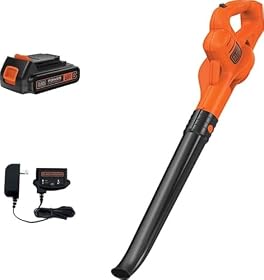
Best leaf blower if you already own the battery platform
The best leaf blower for an existing battery platform is usually the compatible bare tool that provides enough airflow for your yard without forcing you to buy another charger or battery system. Compare platform compatibility first, then CFM, battery size, runtime, weight, and controls.
If you already own a cordless-tool battery platform, the best leaf blower is usually a compatible bare tool from that same system. You can avoid buying another battery and charger, but compatibility is not universal—even between tools with similar voltage labels. Confirm the exact battery family first, then choose the blower’s airflow, runtime, and weight based on your yard.
Start with battery-platform compatibility
A battery’s voltage, connector shape, communication electronics, and mounting system all matter. A blower is compatible only when the manufacturer lists it for your exact battery platform.
Before buying, check:
The battery brand and product family you already own
The voltage or battery series, if the platform has multiple lines
Whether the listing is for a bare tool or includes a battery and charger
Whether your existing battery physically locks into the blower
Whether the manufacturer specifies compatibility with your battery generation
Do not rely on voltage alone. Batteries from different platforms can share similar voltage ratings but still be electrically and mechanically incompatible. Do not modify terminals or use unofficial adapters unless the tool and battery manufacturers specifically approve that setup.
Choose airflow for your yard
Two numbers commonly describe a leaf blower: CFM and MPH.
CFM measures the volume of air the blower moves. Higher CFM generally helps move larger piles, damp leaves, and heavier debris.
MPH measures air speed. Higher MPH can help loosen stuck leaves from grass, cracks, and hard surfaces.
For most homeowners, CFM is the more useful number when clearing a larger area. A blower with a very high MPH rating but modest CFM may produce a narrow, forceful stream without moving a broad layer of leaves efficiently.
A practical match
Small patios, driveways, and light debris: A compact blower with moderate airflow is usually easier to handle and may provide better runtime.
Typical suburban yards: Look for a balanced combination of airflow, air speed, and a battery capacity that fits the area you clear.
Large yards or heavy wet leaves: Prioritize higher CFM and consider carrying a spare compatible battery.
Gravel, mulch, and garden beds: Variable-speed control is especially useful because full power can scatter loose material.
Manufacturers may measure airflow at different points or use different testing conditions, so published CFM and MPH figures are not always directly comparable across brands. Use them as a guide, but also consider the nozzle design and whether the blower has a turbo or boost mode.
Compatible bare leaf blowers for an existing battery system
Product prices and availability are accurate as of the date/time indicated and are subject to change. Any price and availability information displayed on Amazon.com at the time of purchase will apply to the purchase of this product.
Battery size and runtime tradeoffs
Battery capacity is usually expressed in amp-hours, or Ah. In general, a higher-Ah battery can run longer, but it also tends to add weight and cost. Actual runtime changes with the blower’s power setting, debris, temperature, and battery condition.
A small battery may be sufficient for a quick patio cleanup, while a larger battery or spare pack makes more sense for a larger property. If you already own several batteries, buying a bare blower can be more economical than purchasing another kit—but check the product listing carefully because some listings include a battery and others do not.
A useful rule is to match battery size to how you work:
Choose a lighter, smaller pack for short jobs and easier handling.
Choose a higher-capacity pack for longer sessions and maximum sustained output.
Keep a second compatible pack available if stopping to recharge would be inconvenient.
Check whether the blower’s boost mode drains the battery substantially faster than its normal setting.
Product prices and availability are accurate as of the date/time indicated and are subject to change. Any price and availability information displayed on Amazon.com at the time of purchase will apply to the purchase of this product.
Weight and balance matter more than peak power
A powerful blower can become tiring if the battery makes it top-heavy or the handle is poorly balanced. Compare the advertised tool weight with and without the battery when that information is provided.
Look for:
A handle that keeps the nozzle naturally pointed forward
A battery position that does not pull heavily on your wrist
A variable-speed trigger or dial
A trigger lock or cruise-control feature for longer jobs
Product prices and availability are accurate as of the date/time indicated and are subject to change. Any price and availability information displayed on Amazon.com at the time of purchase will apply to the purchase of this product.
Bare tool or complete kit?
A bare tool includes the blower but normally excludes the battery and charger. It is the logical choice when you already have a compatible battery and charger.
A kit usually includes at least one battery and a charger. It may still make sense if your existing batteries are small, worn out, incompatible with the blower’s higher-output battery series, or insufficient for the area you need to clear.
Before comparing prices, calculate the complete cost of ownership:
Confirm whether the blower is bare tool or kit.
Check whether your current battery provides the recommended output.
Account for a spare battery if your yard requires extended runtime.
Confirm that you already have the correct charger.
Check the warranty and replacement-battery availability.
Cordless blower features worth paying for
Not every feature is essential, but several can affect daily use:
Variable speed
Variable speed helps clear delicate areas without moving mulch, gravel, or soil. It also allows lower-power cleanup that may extend runtime.
Boost or turbo mode
Boost is useful for stubborn or wet debris, but it can reduce runtime quickly. Treat it as an occasional power reserve rather than the only operating mode.
Brushless motor
Brushless motors are common in higher-end cordless tools and may offer efficiency, durability, and sustained performance benefits. However, motor type alone does not tell you how much air the blower moves or how comfortable it is to use.
Tube and nozzle options
A narrow nozzle can concentrate airflow for stuck debris, while a wider opening can make broad cleanup more efficient. If you want to use a vacuum or mulching attachment, confirm that the blower is designed for that conversion; a standard blower cannot necessarily accept a vacuum kit.
Noise and controls
Cordless blowers are still loud enough to require hearing protection in many situations. Follow local rules and avoid directing debris toward people, pets, open windows, vehicles, or roadways.
When your existing battery platform may not be the best choice
Staying within one platform is convenient, but it is not always the lowest-cost or best-performing option. Reconsider the platform if:
It offers only low-output batteries for the blower size you need.
Replacement batteries are difficult to find.
Your current batteries are old or no longer hold a useful charge.
The compatible blower is too heavy for your typical cleanup.
You need more airflow than the platform’s cordless models provide.
You would need multiple expensive batteries for a large property.
For a very large yard or frequent professional-style cleanup, a corded blower or gas-powered model may offer a different balance of runtime and power. Each has tradeoffs involving extension-cord management, fuel, maintenance, noise, emissions, and storage.
A quick buying checklist
Before placing an order, verify:
Exact battery-platform compatibility
Bare-tool versus kit contents
CFM and MPH ratings, preferably under comparable measurement conditions
Recommended battery size and expected runtime information
Tool weight with the battery attached
Variable-speed and boost controls
Nozzle configuration and accessory compatibility
Warranty and replacement-battery availability
Whether your current charger works with the battery you plan to use
The right choice is the compatible blower that matches your yard and battery inventory—not necessarily the one with the highest advertised air speed. For a small area, prioritize low weight and control. For broad or damp leaf cleanup, prioritize CFM, battery capacity, and the option to carry a spare pack.
FAQ
Can I use any battery with a cordless leaf blower from the same brand?
No. Brands often have multiple battery families that are not interchangeable. Match the exact platform, voltage series, connector, and manufacturer-approved compatibility information.
Is CFM or MPH more important for a leaf blower?
CFM generally matters more for moving larger amounts of leaves across an area, while MPH helps loosen concentrated or stuck debris. A balanced combination is usually more useful than an extreme rating in only one category.
Should I buy a bare leaf blower if I already own batteries?
Usually, yes, if your current battery and charger are explicitly compatible and provide suitable capacity for the blower. A kit may be preferable if your batteries are worn, too small, or from an incompatible series.
How much battery capacity do I need for a leaf blower?
The answer depends on yard size, power setting, debris, and whether you can swap batteries. Smaller packs suit short cleanups; larger packs or a spare battery are more practical for extended work.