Compact axial blowers can be a practical choice for clearing dry leaves, grass clippings, and light debris from patios, driveways, decks, and garages—but they are not a substitute for a high-powered blower on lawns or heavy leaf piles.
Compact axial blowers make the most sense when you need to clear hardscape surfaces only: patios, sidewalks, driveways, decks, garages, and similar areas. Their compact size is convenient for short cleanup jobs, but they may struggle with wet leaves, deep piles, gravel, or debris spread across a lawn.
What “hardscape only” means
A hardscape-only blower is intended for relatively flat, firm surfaces such as:
Concrete and asphalt driveways
Paved patios and walkways
Wooden or composite decks
Garage floors
Outdoor furniture and steps
Light debris around fences, walls, and sheds
These surfaces allow the air stream to move debris without the blower having to push material through grass, soil, mulch, or dense ground cover.
For this use, a compact blower can be easier to store and quicker to grab than a larger machine. It is generally best for dry leaves, grass clippings, dust, pine needles, and small pieces of loose debris.
Why choose an axial compact blower?
Axial blowers use an in-line fan design that moves air through the housing and tube. In compact handheld tools, this design can provide useful airflow while keeping the unit relatively simple and portable.
The main advantages are:
Small storage footprint: Easier to keep in a garage, shed, or utility closet.
Lower handling burden: Useful for short jobs where a larger blower would be unnecessary.
Fast cleanup: Suitable for clearing a driveway after mowing or sweeping debris from a patio.
Simple maintenance: There is usually no fuel mixing or engine storage procedure with electric versions.
Compact does not automatically mean weak, however. Compare the blower’s published airflow and air-speed figures rather than judging only by its shape or motor label.
Product prices and availability are accurate as of the date/time indicated and are subject to change. Any price and availability information displayed on Amazon.com at the time of purchase will apply to the purchase of this product.
CFM and MPH: which specification matters?
CFM measures the volume of air the blower moves. Higher CFM generally helps carry a larger amount of leaves or debris across a surface.
MPH measures air speed. Higher air speed can help loosen debris stuck in cracks, corners, or textured surfaces.
For hardscape-only cleanup, both specifications matter:
Choose more air volume when moving a broad layer of leaves or clippings.
Choose more air speed when loosening debris from expansion joints, deck gaps, steps, or corners.
Prefer adjustable speed control when you want to move debris without scattering it everywhere.
Published figures may be measured at different points, such as at the blower housing or tube outlet. Treat figures from different products as approximate comparisons unless the manufacturers describe the test conditions in the same way.
Product prices and availability are accurate as of the date/time indicated and are subject to change. Any price and availability information displayed on Amazon.com at the time of purchase will apply to the purchase of this product.
Corded versus cordless for hardscape cleanup
Corded axial blowers
A corded model can be a good fit for a driveway, patio, or garage near a suitable outdoor-rated outlet. It provides continuous operation without battery charging or runtime limits.
The tradeoffs are the extension cord and the need to manage it safely. Use an outdoor-rated extension cord that matches the manufacturer’s instructions, keep connections away from water, and use ground-fault protection where required. Never cut, modify, or bypass electrical safety features.
A corded blower is most convenient when the cleanup area is close to the house or garage. It becomes less practical for detached areas, long sidewalks, or properties without convenient power access.
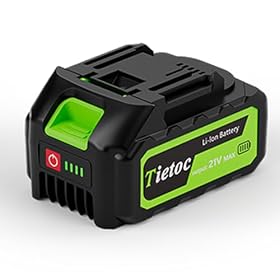
Cordless axial blowers
A cordless model is easier to carry around a property and avoids cord management. It can be a better choice for short cleanup jobs on detached patios, walkways, decks, or driveways.
Before buying, check:
Whether the battery and charger are included
The battery platform and compatibility with batteries you already own
The manufacturer’s stated runtime or operating modes
Whether the tool has variable-speed control
The cost and availability of replacement batteries
Runtime depends on the battery, speed setting, debris, and how continuously the trigger is held. High-power modes usually consume the battery faster than low or variable-speed operation.
Product prices and availability are accurate as of the date/time indicated and are subject to change. Any price and availability information displayed on Amazon.com at the time of purchase will apply to the purchase of this product.
Where compact blowers fall short
An axial compact blower may be the wrong choice when you regularly need to:
Wet leaves are especially demanding because they are heavier and tend to stick to one another and to the surface. A compact blower may still move a few wet leaves, but the job can be slow and frustrating.
If your cleanup includes lawns or heavy seasonal leaf fall, consider a blower with substantially greater airflow, a backpack configuration, or a separate vacuum and mulching system. Do not buy a compact hardscape blower expecting it to perform like a larger property-maintenance machine.
Features worth prioritizing
For hardscape-only use, prioritize features that improve control and convenience rather than maximum output alone.
Variable-speed control
Variable speed helps with delicate areas such as porches, planters, outdoor furniture, and gravel borders. It also lets you gather debris into a manageable pile instead of dispersing it.
Narrow or interchangeable tubes
A narrower outlet can concentrate the air stream for cracks and corners. A wider tube may be more useful for moving a broader layer of dry leaves. Follow the manufacturer’s instructions when changing or removing tubes; do not operate the blower with parts missing unless the instructions specifically permit it.
Comfortable controls
Look for a trigger and handle that are easy to operate with the hand you normally use. A locking or cruise-control feature can reduce finger fatigue during longer cleanup sessions, but it should not replace safe handling.
Battery compatibility
For cordless tools, a compatible battery platform may be more valuable than a small difference in advertised air speed. Sharing batteries with other tools can reduce the number of chargers and battery types you need to maintain.
Debris protection and cleanout access
Fine dust and small debris can collect around intake areas. Check the manual for cleaning instructions and keep ventilation openings clear. Never insert fingers or tools into the blower housing while the battery is installed or the power cord is connected.
How to use one effectively on hardscape
Remove large objects, stones, and loose items that could become projectiles.
Start at a lower speed and identify the direction of the wind.
Work from the edges of the area toward one collection point.
Keep the tube low enough to move debris, but avoid scraping it along the surface.
Use short passes instead of holding maximum power continuously.
Collect the final pile with a rake, broom, dustpan, or approved vacuum setup.
Allow the tool to cool as directed and clean its exterior and air inlets.
Wear eye protection and hearing protection as appropriate. Keep people, pets, and open windows away from the work area, and avoid blowing debris toward roads, vehicles, doors, or neighboring property.
When a different blower is the better purchase
Choose a larger handheld blower if you need to clear both hardscape and lawn areas or regularly deal with moderate leaf buildup. A backpack blower may be more appropriate for large properties or long sessions where carrying comfort matters more than compact storage.
If you only clear a small patio, driveway, or deck and value easy storage, a compact axial model is likely a better match than an oversized blower. The key is to buy for the surface and debris you actually handle—not for occasional conditions the tool was never designed to manage.
Bottom line
Axial compact blowers are most suitable for quick cleanup of dry, loose debris on patios, driveways, decks, sidewalks, and garage floors. Compare CFM, MPH, speed control, power source, and included battery equipment. If you need to clear wet leaves, lawns, deep piles, or large properties, move up to a more powerful blower rather than expecting a compact hardscape tool to do every job.
FAQ
Are compact axial blowers good for concrete driveways?
Yes. They are generally well suited to moving dry leaves, grass clippings, dust, and pine needles across concrete and asphalt. Start at a lower speed when working near doors, vehicles, or loose gravel.
Can an axial compact blower clear wet leaves?
It may move small amounts of wet debris, but wet leaves are heavier and stick together. For frequent wet-leaf cleanup or deep piles, choose a blower with more airflow or a larger configuration.
Is CFM or MPH more important for a hardscape blower?
Both matter. CFM helps move a larger volume of debris, while MPH helps loosen material from cracks and textured surfaces. Variable-speed control can be more useful than maximum output for small, precise cleanup jobs.
Should I buy a corded or cordless compact blower?
Choose corded power when the work area is close to a suitable outdoor outlet and you want continuous operation. Choose cordless power for detached areas and easier movement, while checking battery cost, compatibility, and runtime.