CFM and MPH measure different parts of a leaf blower’s performance, so neither number is always more important. CFM matters more for moving large piles of leaves across a yard, while MPH matters more for loosening wet leaves, debris stuck in grass, and material in tight corners. For most homeowners, the best choice is a blower with a useful balance of both ratings rather than the highest number in only one category.
CFM & MPH · Mon Sep 07
CFM versus MPH: which matters more
CFM measures how much air a leaf blower moves, while MPH measures how fast that air exits the nozzle. The right specification depends on whether you are clearing large areas, moving wet leaves, or cleaning tight spaces.
What CFM means on a leaf blower
CFM stands for cubic feet per minute. It describes the volume of air the blower moves over time.
A higher CFM generally helps a blower:
- Move larger piles of leaves
- Clear a wider path with each pass
- Push leaves across lawns, driveways, and patios
- Finish broad areas more efficiently
Think of CFM as the blower’s air volume. If you are clearing a large yard or pushing leaves into a sizable pile, volume is usually the more useful specification.
A blower with high MPH but relatively low CFM may produce a fast, concentrated stream that is less effective at moving a broad layer of leaves. It can still be useful for detail work, but you may need more passes across a large area.
High-airflow leaf blowers for large yards
 SKIL PWR CORE 40 Brushless 40V 530 CFM Cordless Leaf Blower Kit, Variable Speed with…Skil
$149.00 as of
View on Amazon EGO POWER+ Combo, 670 CFM Leaf Blower and Cordless Weed Trimmer - ST6703LBEGO Power+
$329.99 as of
View on Amazon BLACK+DECKER 3-in-1 Electric Leaf Blower, Leaf Vacuum/Mulcher, Up to 250 MPH, Premium Disposable System, Corded,…BLACK+DECKER
$119.00 as of
View on Amazon
Product prices and availability are accurate as of the date/time indicated and are subject to change. Any price and availability information displayed on Amazon.com at the time of purchase will apply to the purchase of this product.
What MPH means on a leaf blower
MPH stands for miles per hour. It describes the speed of the air leaving the blower, usually at or near the nozzle.
A higher MPH can help when you need to:
- Break up wet or matted leaves
- Dislodge debris from cracks and corners
- Clear leaves from dense grass
- Direct a narrow stream into a specific spot
- Move heavier debris such as small twigs or pine needles
Think of MPH as the blower’s air velocity. A narrow nozzle can increase the speed of the exiting air, much like narrowing the opening on a hose changes the water stream. That higher speed does not necessarily mean the blower moves more total air.
High-speed leaf blowers for wet leaves and detail work
 BLACK+DECKER Electric Leaf Blower, Handheld Blowers for Lawn Care, Lightweight, 180 MPH 180 CFM, 7-Amp,…BLACK+DECKER
$42.72 as of
View on Amazon BLACK+DECKER Leaf Blower Cordless Leaf Vacuum and Mulcher Combo Kit, Battery and Charger Included, 40V…BLACK+DECKER
$134.00 as of
View on Amazon- BLACK+DECKER 3-in-1 Electric Leaf Blower, Leaf Vacuum/Mulcher, Up to 250 MPH, Premium Disposable System, Corded,…BLACK+DECKER
$119.00 as of
View on Amazon
Product prices and availability are accurate as of the date/time indicated and are subject to change. Any price and availability information displayed on Amazon.com at the time of purchase will apply to the purchase of this product.
Why CFM and MPH should be considered together
A leaf blower’s real-world usefulness depends on both air volume and air speed. A high-MPH blower may have a powerful, focused stream, but a high-CFM blower may clear more material in a single pass.
The two ratings can also be listed under different testing conditions. For example, a manufacturer may publish maximum MPH at the end of a narrow tube and maximum CFM under another configuration. Because of this, comparing one number in isolation can be misleading.
When specifications are available, look for:
- CFM at the nozzle, rather than only a rating measured inside the housing
- MPH at the nozzle, with the tube and tip attached
- Whether the ratings are maximum or operating figures
- Whether the blower includes a concentrated nozzle that changes the airflow
- Variable-speed control or a trigger lock for adjusting power
Manufacturer specifications and manuals are the best source for understanding how a particular model’s ratings were measured.
Variable-speed leaf blowers for mixed tasks
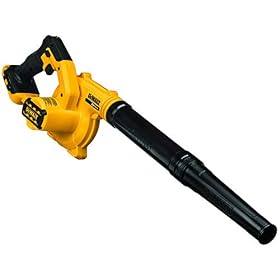 DEWALT 20V MAX Blower, 100 CFM Airflow, Variable Speed Switch, Includes Trigger Lock, Bare Tool…DEWALT
$104.00 as of
View on Amazon- SKIL PWR CORE 40 Brushless 40V 530 CFM Cordless Leaf Blower Kit, Variable Speed with…Skil
$149.00 as of
View on Amazon  BLACK+DECKER Leaf Blower Cordless with Battery and Charger, POWERCOMMAND 40V MAX 90 CFM Variable Speed…BLACK+DECKER
$149.00 as of
View on Amazon
Product prices and availability are accurate as of the date/time indicated and are subject to change. Any price and availability information displayed on Amazon.com at the time of purchase will apply to the purchase of this product.
Which matters more for different yard tasks?
Clearing a large lawn or driveway
Prioritize CFM. A higher airflow volume is better suited to moving a wide layer of leaves and covering more ground with each pass.
A wide or standard blower tube can help spread the airflow across a larger area. Work with the wind when possible, and avoid running the blower at maximum power if a lower setting moves the leaves effectively.
Moving wet leaves
Look for a strong combination of CFM and MPH, with particular attention to MPH if the leaves are stuck together or attached to the ground. Wet leaves are heavier and often require a concentrated stream to break them loose before you move them into a pile.
A variable-speed blower is useful here because you can start with a focused, higher-power stream and then reduce the speed for gathering.
Cleaning flower beds and tight spaces
MPH and nozzle control often matter more than maximum CFM. A concentrated air stream can remove leaves from around edging, fences, steps, and landscaping features.
Use caution around loose mulch, small plants, and decorative stone. High air speed can scatter materials or damage delicate plants.
Clearing grass
A balanced specification is best. CFM helps move the leaves across the lawn, while MPH helps lift leaves caught in dense or damp grass.
Keep the nozzle angled slightly downward rather than pointing straight into the turf. This can help move the leaves without unnecessarily disturbing soil or mulch.
Moving twigs and heavier debris
Prioritize a balanced blower with good air speed and adequate volume. MPH can help break the debris loose, but sufficient CFM is needed to carry it away once it moves.
Do not use a leaf blower to move stones, gravel, or other objects that could become projectiles. Check the manual for the types of debris the manufacturer considers appropriate.
Is a higher MPH rating always better?
No. A high MPH rating does not automatically mean a blower will clear leaves faster.
A very high air-speed figure may be produced through a narrow nozzle. That concentrated stream can be excellent for detail work, but it may cover less area. A blower with more CFM and a moderate MPH rating could be more practical for broad leaf clearing.
Also consider controllability. A blower that only operates at full power may scatter leaves instead of gathering them. Variable-speed control can be more valuable than a small difference in the advertised maximum MPH.
Is a higher CFM rating always better?
Not necessarily. High CFM is helpful for moving large quantities of leaves, but it can make the blower harder to control in small areas. It may also disturb mulch, flower-bed material, or loose soil.
A concentrated nozzle, adjustable power, and a manageable weight can matter as much as the maximum CFM for detailed work. Choose enough airflow for the size of your yard, not simply the largest published number.
A practical way to choose between CFM and MPH
Use this quick guide:
- Small yard with light, dry leaves: Choose a balanced blower with variable speed; extreme ratings may not be necessary.
- Large yard or broad driveway: Give CFM priority.
- Wet leaves or leaves stuck in grass: Look for a strong combination, with enough MPH to loosen material.
- Patios, steps, corners, and flower beds: Favor controllable air speed and a concentrated nozzle.
- Mixed jobs: Choose a variable-speed model with both useful CFM and MPH ratings rather than maximizing one figure.
Other specifications can affect the choice too. Corded blowers can provide continuous operation but require access to an outlet and safe extension-cord setup. Cordless blowers offer more freedom of movement, but runtime depends on battery capacity, power setting, temperature, and the condition of the battery. Gas blowers may offer long operating periods with refueling, but they require fuel, maintenance, ventilation, and compliance with local rules.
How to compare blower specifications fairly
Before comparing two models, make sure the ratings are presented in a similar way. Check whether each figure is measured:
- With the same tube configuration
- At the nozzle or inside the blower housing
- At maximum speed or a normal operating setting
- With or without a concentrator nozzle
- As a maximum figure or a rated working figure
If one manufacturer lists MPH at the nozzle and another lists it without the tube attached, the numbers may not be directly comparable. When the published data is unclear, the controls, included tubes, warranty, power source, weight, and replacement-battery availability may provide more useful decision information than a small difference in the headline rating.
Bottom line
For most leaf-clearing jobs, CFM is the more important number for moving volume, while MPH is more important for loosening stubborn debris and directing airflow. The best all-around leaf blower has a useful combination of both, plus variable-speed control and a nozzle suited to the work.
If you clear large open areas, start by comparing CFM. If you mostly clean steps, corners, flower beds, and damp patches, pay closer attention to MPH and control. For mixed tasks, avoid choosing based on either rating alone.
FAQ
Should I choose CFM or MPH when buying a leaf blower?
Choose CFM first if you need to move large piles or clear broad areas. Give MPH more attention for wet leaves, debris stuck in grass, and precise cleaning. For mixed jobs, choose a blower with a useful balance of both ratings and variable-speed control.
Does higher MPH mean a leaf blower is more powerful?
Not by itself. MPH measures air speed, while CFM measures air volume. A blower can have a high MPH rating from a narrow nozzle but still move less total air than a model with higher CFM.
What is more important for wet leaves, CFM or MPH?
Wet leaves often need enough MPH to break loose, along with enough CFM to move them afterward. A balanced blower with variable speed is usually more useful than one with an extreme rating in only one category.
Why do leaf blower CFM and MPH ratings vary between brands?
Manufacturers may measure airflow with different tubes, nozzles, or testing methods. Check whether the figures are measured at the nozzle, whether they are maximum ratings, and whether the same configuration was used for both models.