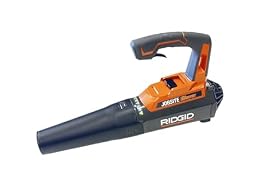
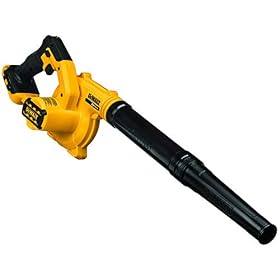
A compact cordless leaf blower is usually the best fit for a townhouse patio and two trees. It is easier to store, avoids managing an extension cord around furniture and landscaping, and provides enough mobility for clearing leaves from a small outdoor area. Choose a corded blower instead if you have a convenient outdoor outlet and want continuous runtime at the lowest equipment cost.
The right choice depends less on maximum power than on control, noise, battery compatibility, and how easily you can store the tool.
What to look for
Air speed and CFM
Leaf blower specifications commonly list air speed in miles per hour (MPH) and air volume in cubic feet per minute (CFM).
- MPH indicates how forcefully air leaves the tube. Higher air speed can help loosen damp leaves or debris stuck in corners.
- CFM indicates how much air the blower moves. Higher air volume is generally more useful for gathering larger piles.
For a patio and two trees, you typically do not need the highest numbers available. A blower with moderate, controllable output is easier to use around planters, mulch, gravel, door thresholds, and outdoor furniture. Excessive airflow can scatter leaves instead of moving them into a manageable pile.
Do not compare MPH figures from one brand directly with CFM figures from another as if either number tells the whole story. Check the manufacturer’s stated ratings and consider whether they are measured at the tube or blower housing.
Variable-speed control
Variable-speed control is more useful in a townhouse setting than maximum output alone. A lower setting can clear leaves from a patio without disturbing mulch, while a higher setting can move heavier or damp debris.
A lock-on or cruise-control feature may also reduce hand fatigue during longer cleanup sessions. Make sure the control layout is comfortable and that the trigger can be adjusted without shifting your grip.
Cordless versus corded power
Cordless blowers
A cordless model is generally the most convenient option for a townhouse patio. It can reach around trees, steps, fences, and parked vehicles without an extension cord. It is also easier to start and put away for short cleanup jobs.
Before buying, check:
- Whether the battery and charger are included
- The battery voltage and capacity specified by the manufacturer
- Claimed runtime and whether it applies to low, high, or variable-speed use
- The cost and availability of replacement batteries
- Whether the battery belongs to a broader tool platform you may already own
- The charging time and recommended storage conditions
Runtime claims can vary substantially with speed setting, leaf moisture, temperature, and battery age. For occasional patio cleanup, one battery may be adequate, but a second battery can be useful if you prefer to finish all seasonal cleanup in one session.
Corded blowers
A corded blower can be a practical value choice when an outdoor outlet is close to the work area. It provides continuous operation without charging or maintaining a battery and can be suitable for regular patio cleanup.
The main drawbacks are managing the extension cord, keeping it away from the blower tube, and working around doors, furniture, and landscaping. Use only an outdoor-rated extension cord and follow the blower manufacturer’s instructions for cord type and length. Do not use a damaged cord, and keep electrical connections away from wet areas.
Noise and townhouse use
Noise matters more when homes are close together. Look for the manufacturer’s published sound information if available, but remember that measured sound levels may not reflect how disruptive the blower feels between nearby buildings.
A variable-speed model lets you use only the airflow needed. Also consider local rules, community policies, and reasonable daytime operating hours. Hearing protection is still sensible during extended use, even with a compact blower.
Tube design and handling
A narrow or tapered tube can make the airflow feel more concentrated, while a wider tube may move a broader area of loose leaves. The best design depends on whether you are directing leaves into a pile or clearing a wide patio quickly.
For a small property, prioritize:
- Low overall weight, including the battery
- A balanced grip that does not pull your wrist downward
- A tube that can be removed or shortened for storage, if the manufacturer allows it
- Simple controls that are easy to reach while wearing gloves
- A tube length that lets you work without bending over
A heavier blower with more output may be unnecessary if it is uncomfortable to carry or difficult to control around delicate surfaces.