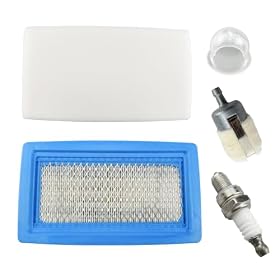
A flooded gas leaf blower usually has too much fuel and not enough air in the engine. Stop repeated starting attempts, let the fuel evaporate, then check the starting procedure, spark plug, air filter, and carburetor settings.
A gas leaf blower is usually flooded when repeated starting attempts put more fuel into the engine than it can burn. The common symptoms are a strong gasoline smell, a wet spark plug, sputtering, or an engine that briefly starts and dies. Stop pulling the starter repeatedly, move the blower outdoors, and let it cool before clearing the excess fuel.
How to clear a flooded gas leaf blower
Move the blower outdoors. Keep it away from flames, pilot lights, cigarettes, and other ignition sources. Do not work in an enclosed garage.
Set the ignition switch to OFF and allow the engine to cool.
Put the choke in the RUN or OPEN position. A closed choke adds fuel and can make flooding worse.
Hold the throttle fully open, if the blower has a throttle control.
Pull the starter several times with the choke open. Use the starting procedure in the owner’s manual; do not hold the trigger or throttle if the manual specifically says not to.
Wait several minutes if the engine does not start. This gives excess fuel time to evaporate.
Try starting it again with the choke open. Once it starts, let it run at an appropriate idle or moderate speed rather than immediately shutting it off.
Do not spray starting fluid into the intake unless the manufacturer specifically permits it. Starting fluid can damage some small engines and creates an additional fire risk.
Check the spark plug
Remove the spark plug only after the engine is cool and the ignition is switched off. Follow the manual for the correct procedure and use the correct spark-plug socket.
A wet plug is a strong sign of flooding. Let it dry completely or replace it if it is fouled, cracked, badly worn, or has damaged threads. The plug gap must match the manufacturer’s specification; do not guess or use a generic gap setting.
Reconnect the plug wire securely before trying to start the blower. If the plug becomes wet again after only a few starting attempts, the engine may be receiving too much fuel or may not be producing a reliable spark.
Product prices and availability are accurate as of the date/time indicated and are subject to change. Any price and availability information displayed on Amazon.com at the time of purchase will apply to the purchase of this product.
Inspect the air filter and intake
A severely dirty air filter restricts airflow, making the fuel mixture too rich. Remove and inspect the filter according to the manual.
Replace a disposable paper or foam filter if it is damaged or cannot be cleaned as directed.
Clean a reusable filter only by the method specified by the manufacturer.
Do not run the blower without its filter unless the manual specifically allows a brief service check.
Make sure the filter, cover, and intake passage are installed correctly.
A blocked intake screen, debris around the air box, or a filter cover that is not seated correctly can also affect starting and airflow.
Product prices and availability are accurate as of the date/time indicated and are subject to change. Any price and availability information displayed on Amazon.com at the time of purchase will apply to the purchase of this product.
Confirm the starting procedure
Flooding often follows an incorrect choke sequence rather than a failed part. The exact procedure varies by engine, so use the instructions printed on the blower or in the owner’s manual.
In general, a cold engine may need primer use and a closed choke, while a warm engine usually needs little or no choke. Pumping the primer repeatedly, leaving the choke closed after the engine briefly fires, or continuing to prime an already-warm engine can add excess fuel.
If the engine starts and immediately dies, move the choke toward RUN gradually rather than repeatedly returning it to full choke. Do not press the primer bulb unless the manual calls for it.
Product prices and availability are accurate as of the date/time indicated and are subject to change. Any price and availability information displayed on Amazon.com at the time of purchase will apply to the purchase of this product.
Check the fuel and carburetor
Old, contaminated, or incorrectly mixed fuel can cause hard starting and repeated flooding. Use the fuel type and oil-to-gas mixture specified by the manufacturer. If the fuel is stale, drain it safely and refill with fresh fuel recommended for that engine.
With the engine off and cool, inspect for:
A primer bulb that stays collapsed, leaks, or does not refill
Cracked or soft fuel lines
A fuel cap vent that appears blocked
Fuel leaking around the carburetor
A carburetor that has been adjusted beyond the manufacturer’s settings
A stuck carburetor float, leaking needle valve, damaged diaphragm, or blocked metering passage can allow too much fuel into the engine. These problems generally require a carburetor service kit, cleaning, or carburetor replacement. Do not change high- and low-speed adjustment screws unless the manual provides a procedure and you can follow it safely.
If gasoline is leaking continuously, stop using the blower. Have the fuel system serviced or replace the affected part before operating it again.
If the leaf blower still will not start
After clearing the flood and checking the plug, filter, fuel, and starting procedure, the problem may not be flooding. Possible causes include a failed ignition coil, damaged flywheel key, restricted exhaust screen, low compression, or an internal engine problem.
A basic spark check should be performed only according to the manufacturer’s instructions, because ignition systems produce high voltage and fuel vapors are flammable. If you are not comfortable servicing a small gasoline engine, take the blower to a qualified repair technician.
A repair is usually reasonable when the blower is otherwise in good condition and needs a plug, filter, fuel line, or routine carburetor service. Replacement may make more sense when the engine has low compression, the carburetor and ignition system both need major work, or repair costs approach the price of a suitable new blower.
Preventing future flooding
Use the manufacturer’s starting sequence for cold and warm engines.
Avoid repeated primer presses once fuel is reaching the engine.
Do not leave the choke closed after the engine starts.
Use fresh fuel and the specified fuel mixture.
Store the blower as directed, especially if it will sit unused for an extended period.
Keep the air filter clean and replace damaged fuel-system parts promptly.
Never operate or troubleshoot a gasoline blower near sparks, flames, or enclosed poorly ventilated spaces.
A strong gasoline smell, a wet spark plug, repeated failed starts, and an engine that sputters or briefly starts and dies are common signs. Flooding happens when excess fuel enters the engine without enough air to burn it.
Should I use the choke when a leaf blower is flooded?
Usually no. Put the choke in the RUN or OPEN position while clearing a flood, but follow the starting procedure in the owner’s manual because controls vary by model.
How long should I wait before starting a flooded leaf blower again?
Wait several minutes with the blower outdoors and away from ignition sources. If the spark plug is wet, remove and dry or replace it according to the manufacturer’s instructions before trying again.
Why does my leaf blower keep flooding after I replace the spark plug?
A replacement plug will not correct an excessive-fuel problem. Check the starting procedure, primer bulb, air filter, fuel lines, carburetor, and fuel quality. A leaking carburetor needle valve, stuck float, or damaged diaphragm may require service.
Is it safe to keep pulling the starter on a flooded leaf blower?
No. Repeated attempts can add more fuel, foul the spark plug, and increase the risk from gasoline vapors. Move the blower outdoors, stop cranking, let it cool, and clear the excess fuel using the manufacturer’s procedure.