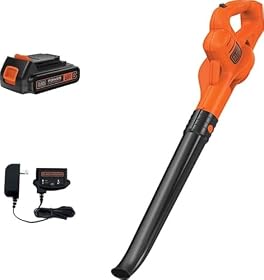
Extra battery that fits an existing cordless platform
The safest way to buy an extra cordless blower battery is to match the exact battery platform, voltage class, physical connector, and charger system—not just the battery’s appearance.
An extra battery fits an existing cordless leaf blower only when it belongs to the same battery platform and matches the tool’s physical and electrical requirements. Start with the brand and platform name printed on your current battery or blower, then confirm the voltage class, connector design, compatibility list, and charger requirements before buying. A battery that looks similar or has the same nominal voltage may still be incompatible.
Check the battery platform first
Cordless tool brands usually organize batteries into platforms that share a connector and electronic communication system. A battery made for one platform generally should not be forced into another tool, even if the voltage marking appears similar.
Look for:
The brand name and platform name on the battery, blower, or charger
The voltage class listed in the blower manual or on its rating label
The battery part number or family name
A compatibility chart from the blower or battery manufacturer
The most reliable match is an additional battery from the same platform family as the one already used with the blower. If the original battery is missing, check the blower’s model number in the owner’s manual or manufacturer documentation before shopping.
Match more than the voltage
Voltage is important, but it is not enough by itself. Confirm all of these details:
Voltage and battery type
Use the voltage class specified for the blower. Do not assume that a higher-voltage battery will provide more power safely, or that a lower-voltage battery will operate the tool. Lithium-ion batteries may also use platform-specific protection electronics, so battery chemistry and communication features can matter.
Physical connector and locking mechanism
The rails, terminals, locking tabs, and battery housing must match. Do not modify the housing, remove locking features, or use adapters unless the blower manufacturer specifically approves that setup. An incorrectly seated battery can cause intermittent operation or create a safety hazard.
Charger compatibility
Confirm that your existing charger is approved for the replacement battery. Some batteries in the same broad product family may require a particular charger or charging procedure. Never charge a battery with an improvised charger or one that is not listed as compatible.
Model and platform compatibility
A manufacturer’s compatibility list is more useful than a marketplace title. Check whether the battery is approved for your exact blower model or for the specific platform family. If the listing only says “fits many tools” without naming the platform and compatible models, treat it cautiously.
Higher-capacity battery for longer cordless blower runtime
Battery capacity affects runtime, weight, and charging needs. Capacity may be expressed in amp-hours, commonly abbreviated as Ah. Within a compatible platform, a higher-capacity battery can generally provide longer operating time, but it may also add weight and cost. Actual runtime varies with blower speed, turbo use, wet leaves, debris volume, temperature, and battery condition.
A practical choice depends on your yard and work pattern:
Small cleanup jobs: A compact battery may be easier to carry and sufficient for patios, walkways, and light leaf removal.
Medium yards: A mid-capacity battery can reduce interruptions without making the blower unnecessarily heavy.
Large properties or extended cleanup: A higher-capacity battery or a second compatible battery may be more convenient than stopping to recharge.
Frequent turbo use: Plan for shorter runtime than the manufacturer’s light-duty or low-speed estimate.
If the blower accepts only one battery at a time, an extra battery is useful when you can charge one while using the other. If the tool requires two batteries simultaneously, both batteries must meet the manufacturer’s compatibility requirements; do not assume that mixing capacities or battery generations is acceptable.
Compatible charger for a cordless blower battery platform
Product prices and availability are accurate as of the date/time indicated and are subject to change. Any price and availability information displayed on Amazon.com at the time of purchase will apply to the purchase of this product.
OEM versus third-party replacement batteries
An original-equipment battery is usually the simplest compatibility choice because it is designed for the manufacturer’s platform, charger, and protection system. A third-party battery may cost less, but compatibility claims should be checked carefully.
Before choosing a non-OEM battery, verify:
The exact platform and blower model compatibility
The stated voltage and capacity
Whether the existing charger is approved
The warranty and return policy
Safety certifications and protection features listed by the seller
Whether the battery includes the correct connector and locking design
Avoid listings that rely only on visual similarity, make unusually broad compatibility claims, or provide no clear manufacturer information. A battery that does not communicate correctly with the tool or charger can fail to operate, charge improperly, or create a safety risk.
Check the battery’s condition if you already have one
If you are replacing a battery rather than adding a second one, inspect the old battery and charger before ordering. Clean dust from the contacts with a dry cloth and check for damage to the housing, terminals, and locking tabs. Do not use a battery that is swollen, cracked, leaking, unusually hot, or visibly damaged.
If the blower works with another known-compatible battery but not the old one, the battery may need replacement. If multiple compatible batteries fail in the same blower, the issue may be with the tool, contacts, charger, or control electronics rather than the battery.
Do not open a lithium-ion battery pack or attempt to replace its internal cells. Stop using it and follow the manufacturer’s disposal or service instructions if it is damaged.
When buying an extra battery makes sense
An extra battery is a practical upgrade when the blower itself still meets your needs and you want more operating time. It is especially useful when:
You already own other tools on the same platform
The original battery is still healthy but does not last through a typical cleanup
Charging interruptions are inconvenient
You want to avoid buying another charger and tool system
Buying a new blower may make more sense when the existing model has insufficient airflow for the job, uses an obsolete platform, has damaged battery contacts, or requires a battery that is difficult to find. Compare the cost of a compatible battery, charger, and replacement blower before deciding.
Safe charging and storage
Follow the battery and charger manuals for charging, storage, and temperature limits. Charge on a stable, nonflammable surface in a suitable location, and keep the battery away from water, extreme heat, and metal objects that could bridge the terminals. Remove the battery from the blower for storage if the manufacturer instructs you to do so.
If a pack becomes hot, emits an odor, swells, smokes, or behaves abnormally, disconnect it from the charger if it is safe to do so, move away from the area, and follow the manufacturer’s emergency and disposal guidance. For uncertain compatibility or damaged equipment, contact the manufacturer or a qualified service professional rather than experimenting with adapters or modified connections.
FAQ
Can I use any battery with the same voltage on my cordless leaf blower?
No. The battery must also match the blower’s platform, connector, locking mechanism, electronics, and approved charger system. Check the manufacturer’s compatibility information for the exact tool or platform.
Is a higher-Ah battery better for a cordless blower?
A higher-capacity battery can provide longer runtime within a compatible platform, but it may be heavier and more expensive. It does not automatically make every blower more powerful, and actual runtime depends on speed, turbo use, debris, and operating conditions.
Can I mix two different battery capacities in a blower that uses two batteries?
Only if the manufacturer specifically allows that combination. Follow the blower manual and use batteries from the approved platform and voltage class. Do not assume that different capacities or battery generations can be mixed safely.
How do I know whether a third-party blower battery is safe?
Look for clear platform and model compatibility, charger approval, a stated voltage and capacity, a reputable warranty or return policy, and documented safety protections or certifications. Avoid batteries with vague compatibility claims or no identifiable manufacturer information.
Should I buy another battery or replace the leaf blower?
Buy another battery when the blower still has adequate airflow and the main problem is runtime. Consider replacing the blower when it is underpowered for your yard, damaged, tied to an unavailable platform, or would require an unusually expensive battery and charger to keep operating.